

John Doe
Tonglida Heavy Industry Machinery Engineer
Automated Guided Vehicles (AGVs) are extensively deployed in manufacturing plants, warehouses, distribution centres, and heavy industrial sectors for the autonomous transport of materials without human intervention, providing a cornerstone solution for industrial automation and smart warehouse logistics.
This article provides a overview of AGV operating principles, primary classifications and core advantages, with a particular focus on a key solution: the AGV Transfer Cart.
What Are Automated Guided Vehicles (AGVs)?
Automated guided vehicles (AGVs) are unmanned vehicles capable of autonomously transporting materials within industrial environments without human operation. AGVs navigate along pre-programmed or dynamically planned routes via their navigation systems and are centrally coordinated by a control system.
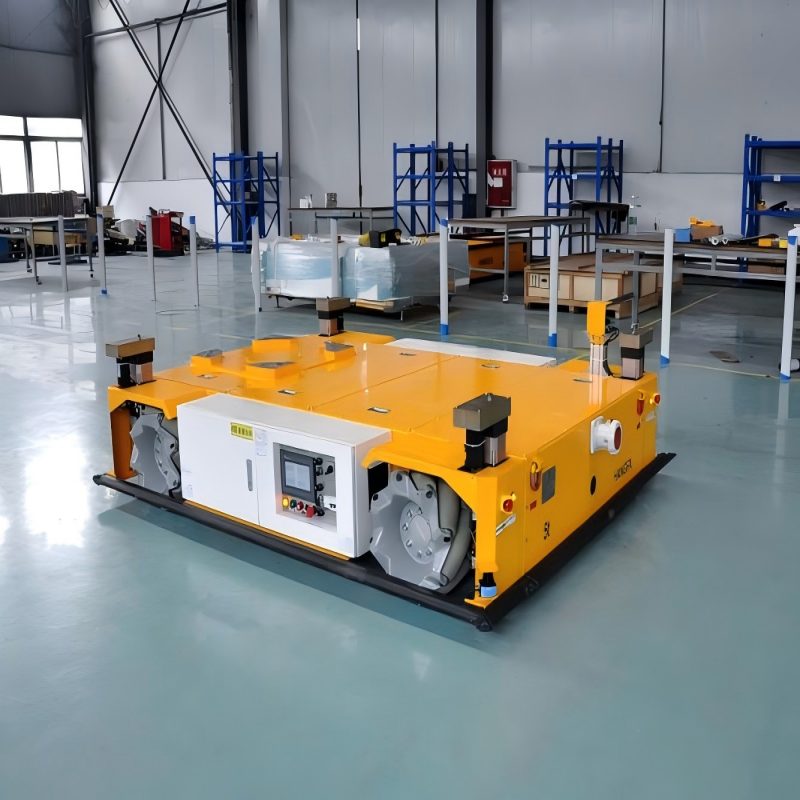
Compared to conventional manual forklifts or hand-pushed trolleys, AGVs offer continuous operation, stable reliability, and a high degree of automation. They are commonly employed for pallet transport, production line feeding, warehouse replenishment, and internal workshop logistics.
How Automated Guided Vehicles (AGVs) Work?
I. AGV Navigation and Guidance Technologies
Depending on the application, AGVs can use various guidance methods, including magnetic tape or magnetic spot guidance, laser navigation, QR code navigation, vision-based navigation, and SLAM-based free navigation.
These technologies allow AGVs to operate on fixed routes or move flexibly in complex and changing environments.
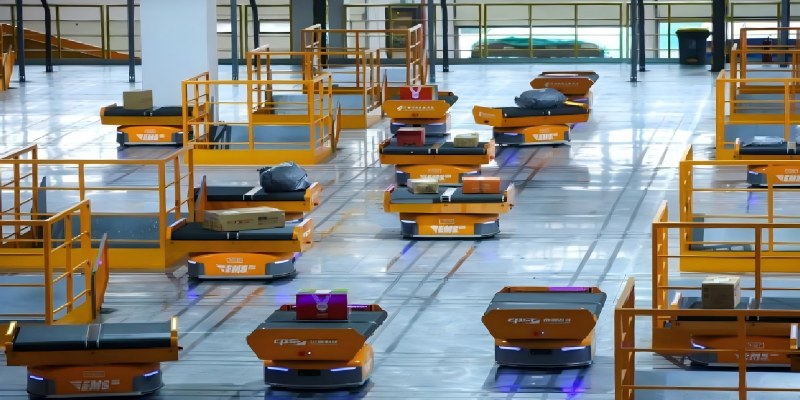
AGV Magnetic Strip Navigation

QR Code Navigation
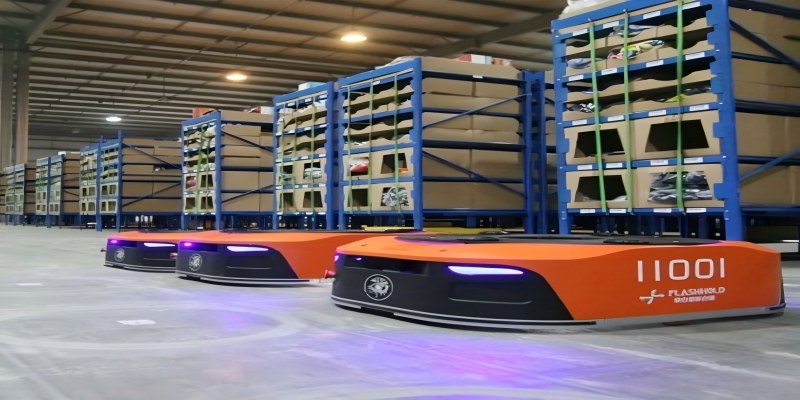
Laser SLAM Navigation
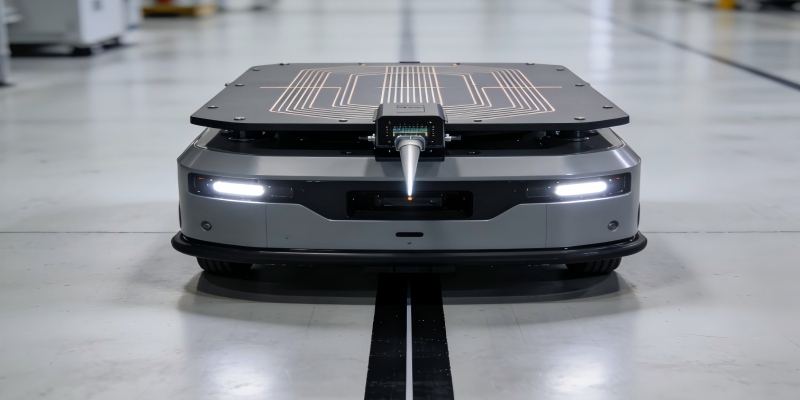
Inertial Navigation

Cooperative Navigation
II. TONGLIDA AGV Software
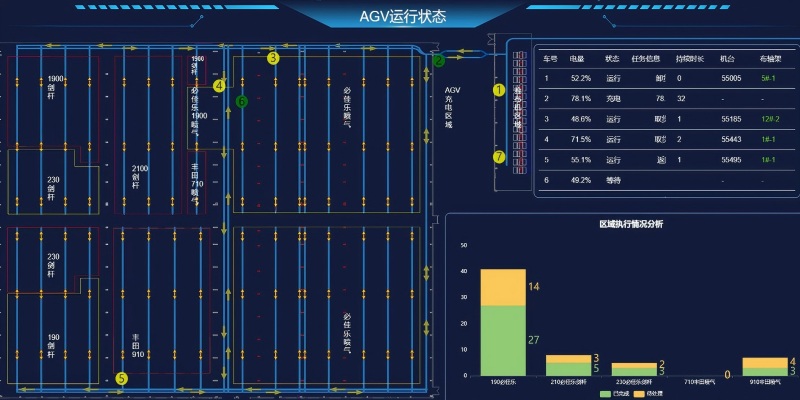
All AGVs are connected to a central fleet management system that assigns transport tasks, optimizes routes, and manages traffic within the facility. By integrating with WMS, MES, or ERP systems, AGVs can automatically respond to production schedules and inventory movements, enabling fully automated material handling.
III. Sensors and Safety Systems
To ensure the safety of personnel and equipment, AGVs are typically equipped with laser scanners, proximity sensors, collision protection devices, and emergency stop systems.
Types of Automated Guided Vehicles (AGVs)
I. Automated Guided Carts (AGCs)
Automated Guided Carts are automated material handling vehicles designed for factories and warehouses. They can transport goods along pre-programmed routes without human operation, enhancing efficiency and safety.
II. Tugger AGV
Tugger AGVs are mainly used to tow multiple material carts for batch transport within factories, making them suitable for long-distance and high-frequency logistics tasks.
III. Forklift AGV
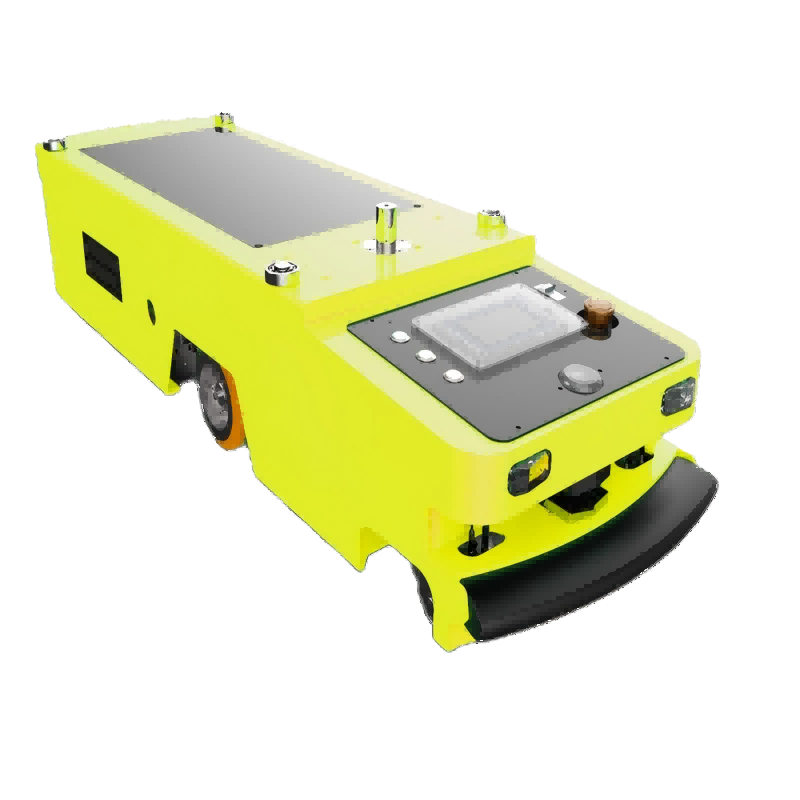
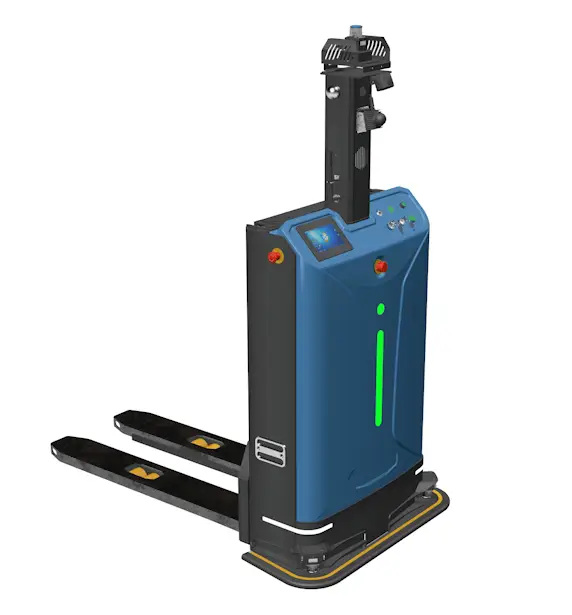
Forklift AGVs are equipped with automatic lifting and stacking functions, enabling pallet loading, transport, and high-bay storage operations. They are widely used in automated warehouses, high-bay storage systems, and logistics environments requiring frequent stacking operations.
IV. Unit Load AGV
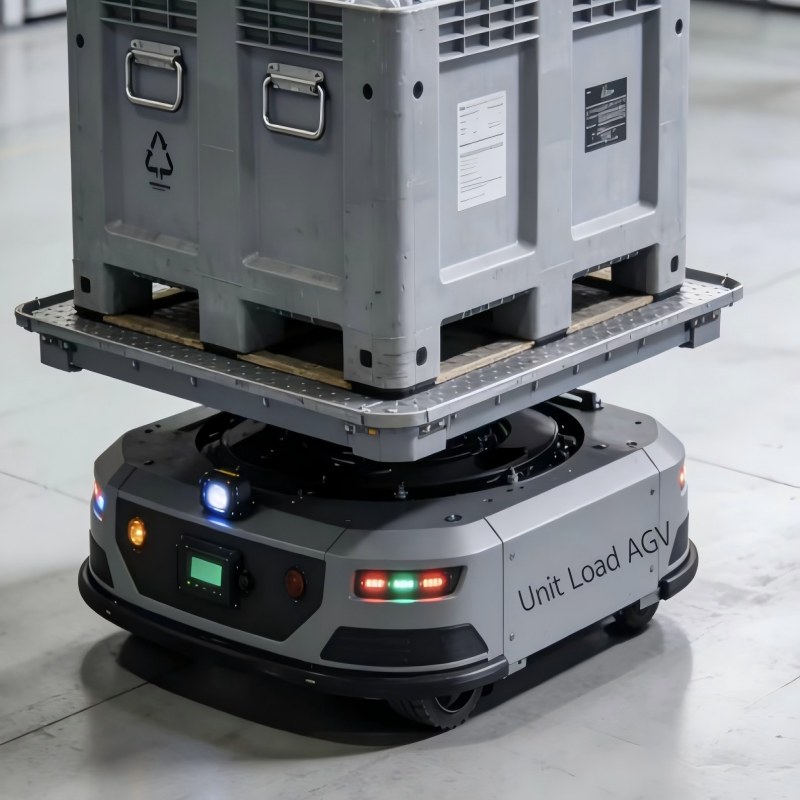
Unit load AGVs are designed to carry pallets, containers, or fixtures directly, operating on fixed or flexible routes.
V. Heavy-Duty AGV
Heavy-duty AGVs are specifically designed to transport large components and heavy workpieces, featuring high load capacity and reinforced chassis structures. They are widely used in heavy machinery manufacturing, steel industry, shipbuilding, and energy equipment manufacturing.
AGV transfer carts are heavy-duty platform-type AGVs mainly used for transporting heavy loads between workstations and within production lines.
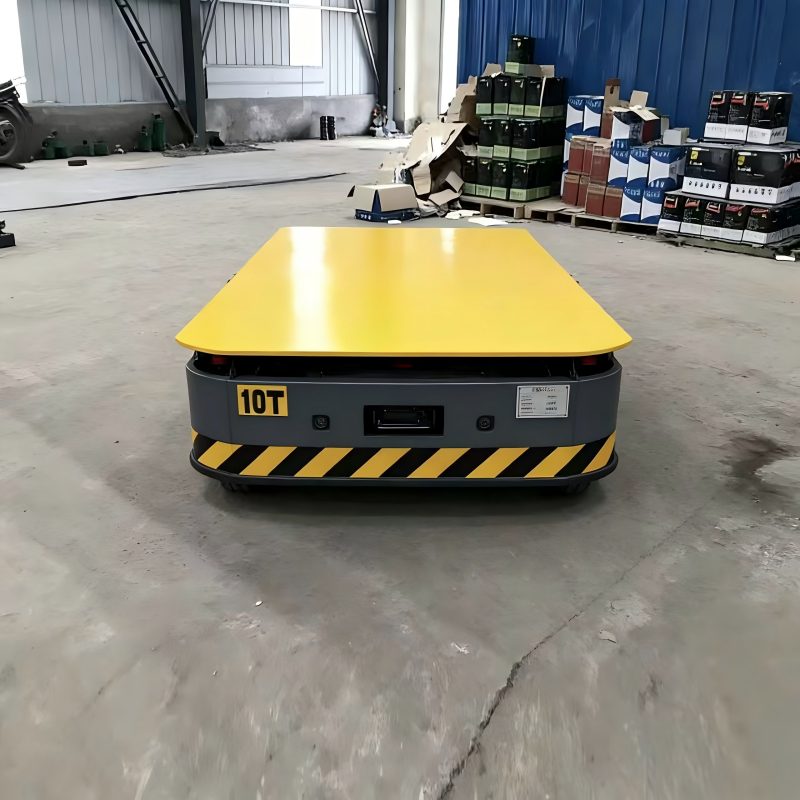
AGV Transfer Cart
What Is an AGV Transfer Cart?
The AGV Transfer Cart is an automated transfer platform designed for transporting heavy-duty or oversized materials between workstations, production lines, and storage areas.
Compared to standard AGVs, transfer carts typically feature higher load capacities, more robust construction, and greater customization capabilities.
Features and Capabilities of AGV Transfer Cart
Key features include high load-bearing capacity, trackless navigation design, stable platform structure, high-precision automatic docking, and seamless integration with production equipment. These capabilities make the AGV Transfer Cart particularly well-suited for high-intensity, high-reliability industrial environments.
Key Benefits of Using AGVs
1. Enhancing Operational Efficiency
AGVs reduce transport time and minimize congestion, ensuring stable and efficient internal logistics. AGVs are capable of operating continuously 24h without being affected by fatigue or shift changes.
2. Reducing Labor Costs
Key features include high load-bearing capacity, trackless navigation design, stable platform structure, high-precision automatic docking, and seamless integration with production equipment. These capabilities make the AGV Transfer Cart particularly well-suited for high-intensity, high-reliability industrial environments.
3. Improving Process Stability and Consistency
AGVs follow fixed routes and standardized motions, ensuring that every transport task is performed with consistent timing, positioning, and rhythm.
An Automated Guided Vehicle (AGV) is a driverless vehicle used to automatically transport materials within factories and warehouses, widely applied in manufacturing and logistics environments.
Some AGVs require navigation facilities such as magnetic strips, QR codes, or reflectors. Even laser or vision-based navigation systems may necessitate optimizing floor conditions, aisle widths, and operational workflows.
It operates 24/7 with uninterrupted automation, while its intelligent system coordinates multiple vehicles to navigate optimal routes. Seamless integration with production and warehousing systems enables precise material delivery.