
Heavy material handling is the backbone of industrial operations. For decades, forklifts and overhead cranes have been virtually irreplaceable mainstays. However, as production processes evolve, these traditional tools reveal limitations. While forklifts offer flexibility, they struggle with heavy loads or repetitive long-distance tasks. Cranes can lift massive objects, but their fixed positions and space requirements restrict daily lateral maneuverability.
So, industrial material transfer carts offer a complementary solution to current transfer demands. They precisely, efficiently, and safely handle repetitive horizontal transport tasks.
I. What is a material transfer cart?
Material transfer cart are industrial carts specifically designed for transporting heavy materials within factory workshops.
Unlike forklifts that rely on operator operation and cranes that are restricted by tracks and lifting gear, transfer cart offer a stable, efficient and safe way of horizontal handling.
There are various types of transfer cart: battery-powered material transfer cart, track-guided powered material transfer cart, or powered by sliding contact lines/induction charging systems. Depending on the model, they can carry several tons of weight and are very suitable for handling steel coils, molds, automotive parts or large mechanical components.
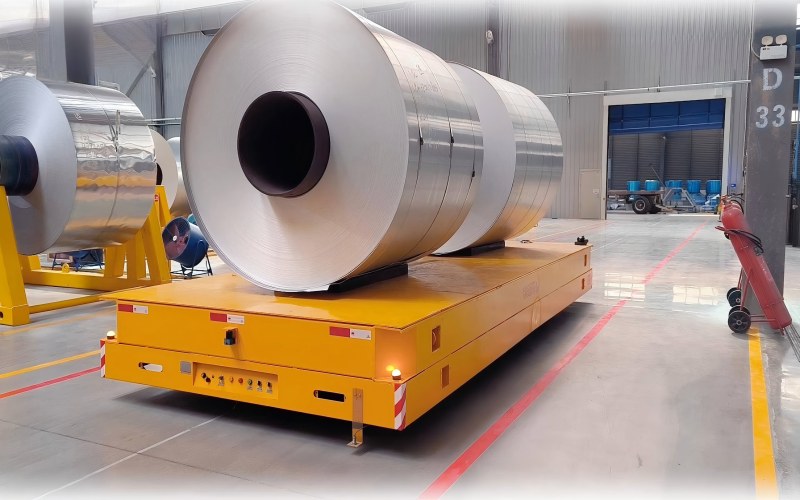
In addition to carrying capacity, many transfer cart are also equipped with precise control systems, anti-collision devices and automatic guidance functions, which can be seamlessly integrated into modern automated production lines. They are not intended to replace existing equipment but to complement it – undertaking repetitive and horizontal handling tasks that would be inefficient, labor-intensive and risky if accomplished by manual labor or traditional equipment.
II. Material transfer cart vs crane & forklift
For decades, forklifts and cranes have been the backbone of heavy material handling in factories. Forklifts are flexible and can operate in relatively narrow Spaces, while cranes can precisely lift large loads. However, as the factory scale expanded and the production process became more complex, the limitations of these two traditional devices became increasingly obvious.
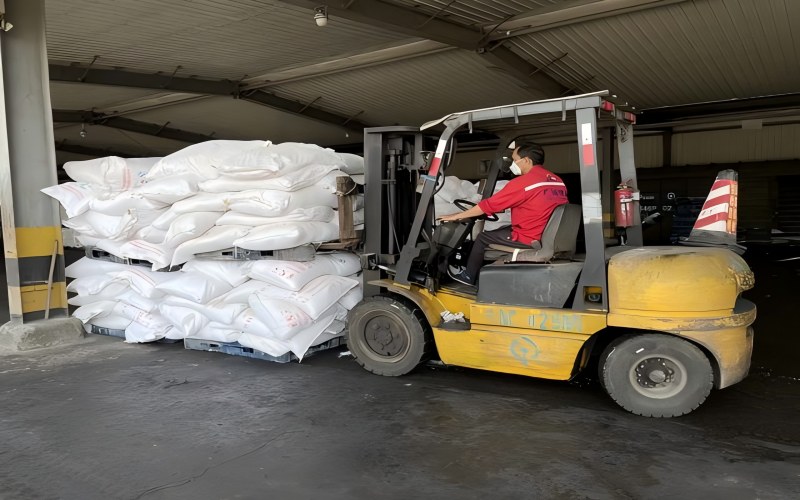
- Forklifts are highly suitable for short-distance transportation, but they may struggle when it comes to handling overweight or bulky materials, as well as long-distance repetitive transportation. Continuous and repetitive horizontal handling not only increases the burden on equipment and operators, but also raises the risk of accidents and reduces work efficiency.
- Cranes can carry heavier materials and perform well in vertical handling, but their positions are fixed and their horizontal handling range is limited. In large-scale workshops, handling materials often requires additional operations, and the accuracy of material positioning also depends on the operator’s skills and their own design.
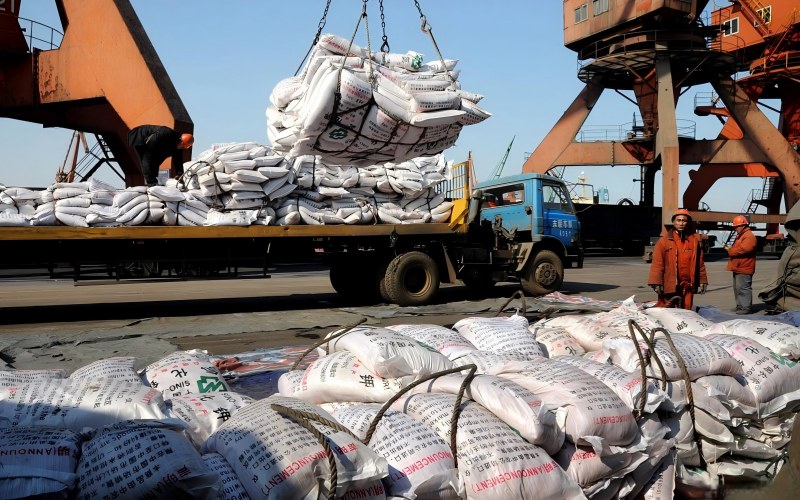
At this point, the material transfer cart becomes particularly important. The transfer cart is specially designed for repetitive and efficient horizontal transportation, capable of safely carrying several tons of weight, reducing the fatigue of operators, and lowering the risk of accidents through built-in emergency stop, anti-collision and other safety devices. Compared with forklifts, it does not require continuous manual operation. Compared with cranes, it is not restricted by vertical tracks, has higher positioning accuracy and more obvious advantages in automation.
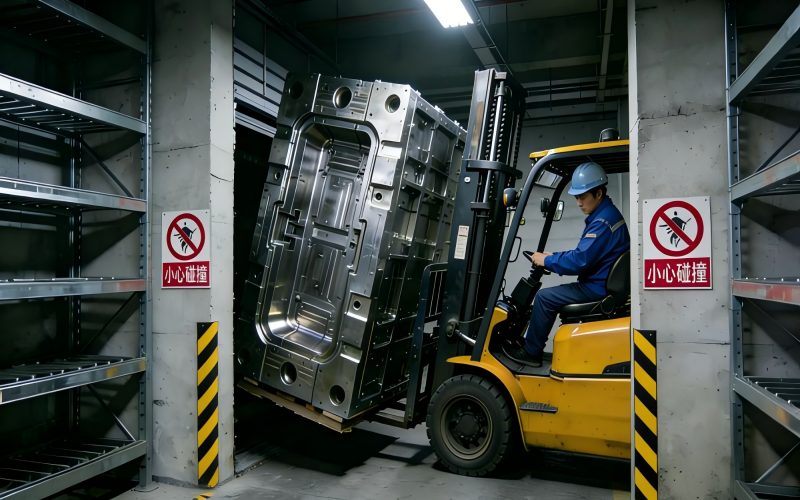
By undertaking repetitive horizontal handling tasks, transfer cart complement traditional equipment: forklifts can focus on flexible short-distance handling, cranes are responsible for vertical lifting, and transfer carts ensure the repetition of production processes and horizontal material handling.
III. Material transfer carts for industrial use
In the steel industry, transfer cart are responsible for transporting steel coils, steel plates and heavy components from one process to another. Traditional forklifts are inadequate when handling these huge loads, and although overhead cranes can lift, they are often limited by the horizontal movement range, which slows down the production pace.
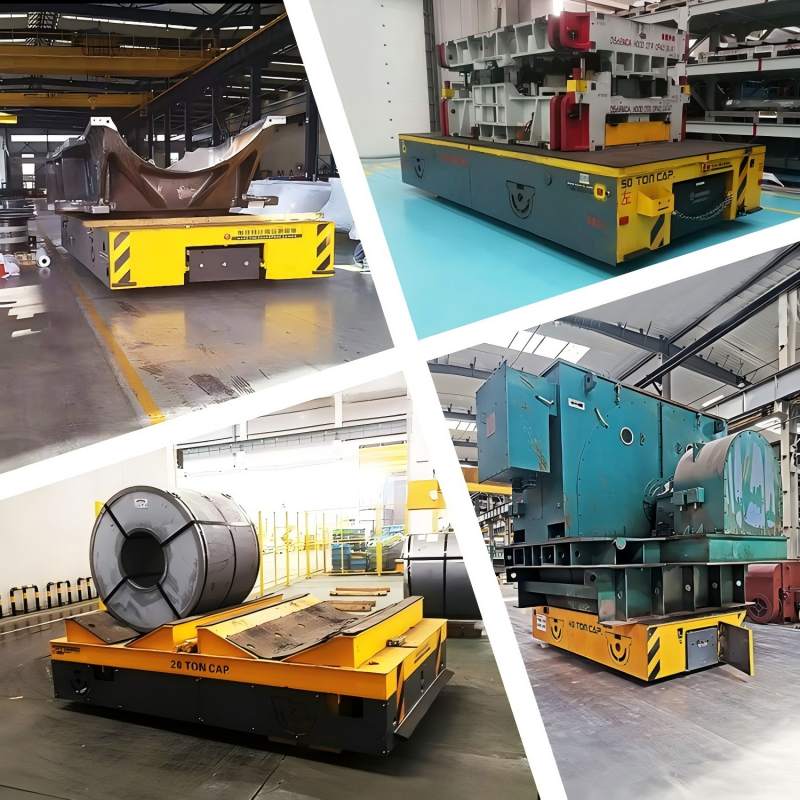
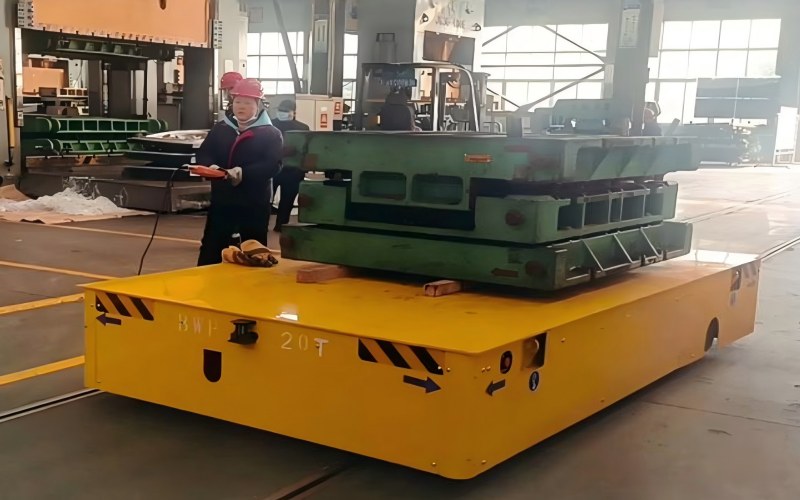
In the automotive manufacturing industry, large molds, engines and chassis components need to be transported between processing, assembly and finishing. transfer cart equipped with automatic navigation systems can move precisely along preset paths, reducing human errors and accelerating the production cycle.
The foundry and metal casting industries have also benefited from transfer cart. High-temperature or overweight molds or castings need to be handled safely to prevent injury to operators or damage to equipment. transfer cart designed with high-temperature resistant platforms and precise braking systems can reliably handle these loads.
Other industries, such as shipbuilding, aerospace and electronic manufacturing, also use transfer cart to move precise, oversized or high-value materials, which need to be precisely positioned. By integrating transfer cart into automated production lines, factories can reduce labor costs, enhance safety, and maintain stable production capacity.
IV. Economic & Safety Benefits of Transfer Carts
When enterprises introduce new handling equipment, the two most frequently considered questions are: “Is it safer?” And “Can it save money?”
The response from the transfer vehicle is usually “Yes, absolutely.”
Material Transfer Cart Reduces Labor Cost
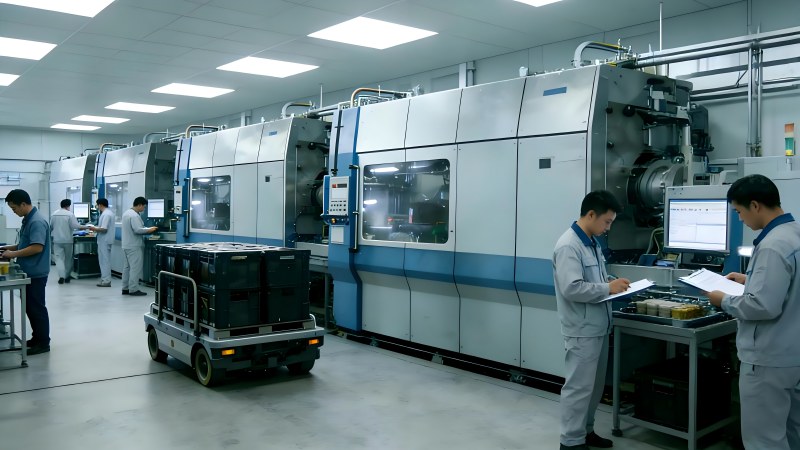
In many factories, moving a heavy object often requires a forklift driver, a commander, and sometimes additional personnel to observe the path. However, after using transfer cart (especially rail-mounted or battery-powered ones), the operation becomes much simpler. One operator can complete the entire handling process through a remote control or an automatic program.
Transfer Cart Maintenance Costs Less Than Forklifts
The maintenance cost of forklifts is high, requiring engine maintenance, tire replacement, hydraulic system maintenance.
However, for transfer carts, since the batteries are maintenance-free, they only require timely charging, regular inspection of the braking system, component wear, and lubrication.
Transfer Cart Security
Forklifts remain a high source of factory accidents. It is prone to tipping over, hitting the shelves and scratching the staff. Cranes also face risks of high-altitude operations: load swinging, hook slippage, and misunderstanding of command signals, etc.
The transfer vehicle significantly reduces these risks. It not only has a controllable speed, a fixed route, but also a stable load without swaying. This is of great significance for safety in densely populated workshops.
Transfer Cart Protect High-value Products
The materials handled in the automotive, aerospace and mold industries are not only heavy but also expensive. Once bumped, the damage will be huge.
The transfer cart accelerates smoothly, the platform is stable and does not shake, significantly reducing the risks of scratches and deformations.
VI. Transfer Cart Future Trends
If the past decade was a period when transfer cart quietly entered industrial sites, then in the next decade, they will witness a real acceleration. Whether it is manufacturing, steel mills, shipyards, or the new energy, battery, and chemical industries, everyone is seeking a safer, smarter, and more predictable way of transportation.
- Automation and unmanned operation will become inevitable
- Battery energy efficiency continues to rise
- The deep integration of factory digitalization and transfer cart
- Customization will become the mainstream rather than the exception
- Gradually become the standard configuration of "ground logistics"
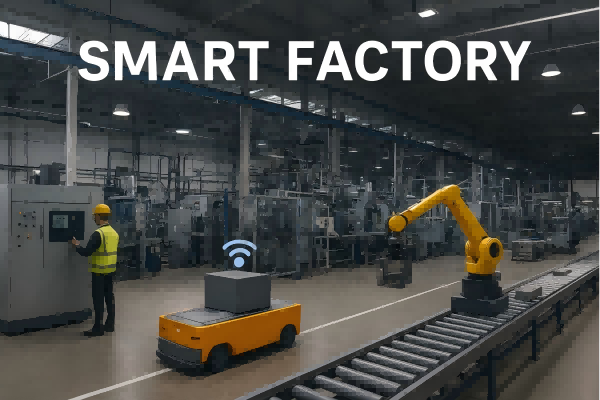
Overall, transfer cart are evolving from an “optional” option to a “must-have” one, and from merely handling materials to becoming a part of industrial intelligent logistics