
In modern industrial operations, weighbridges play a critical role in controlling material flow, ensuring regulatory compliance, and maintaining accurate production records. A well-designed industrial weighbridge is no longer just a steel platform – it is an engineered system that integrates mechanical stability, advanced sensors, intelligent electronics, and digital connectivity.
This article outlines the key design considerations for building a high-accuracy industrial weighbridge, helping factories and engineers make decisions that support long-term stability and operational efficiency.
Pitless Weighbridge
Pit-type Weighbridge
Intelligent Weighbridge
Customized Weighbridge
I. Steel Frame for Weighbridge
The core of high-precision industrial floor scales lies in the sturdy and precisely designed steel structure frame. The frame must be able to resist bending, twisting and long-term fatigue, which are usually caused by the high load and frequent use of heavy trucks. By using high-strength structural steel and adopting an optimized I-beam or channel steel design, it is possible to effectively ensure that the platform maintains its shape for a long time without deformation.
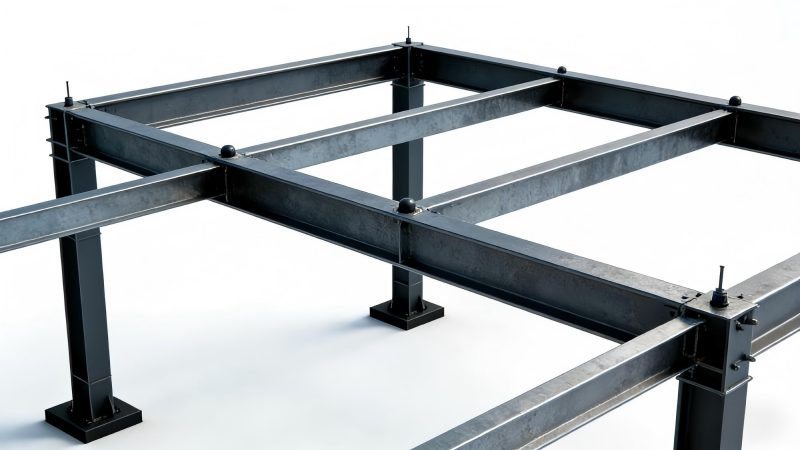
The steel frame must also have sufficient environmental resistance. Through anti-corrosion coating, hot-dip galvanizing treatment and sealed welded structure, it can effectively resist the erosion of moisture, chemicals and outdoor environment. A stable and corrosion-resistant frame not only extends the service life of the equipment but also prevents sensor misalignment and weighing errors caused by structural degradation.
II. Selection of Weighbridge Dimensions
The size of the weighing platform is crucial for ensuring the precise weighing of all vehicles in the factory. The length and width of the weighbridge must be adapted to the largest vehicle expected to be used to avoid measurement errors caused by partial loading.
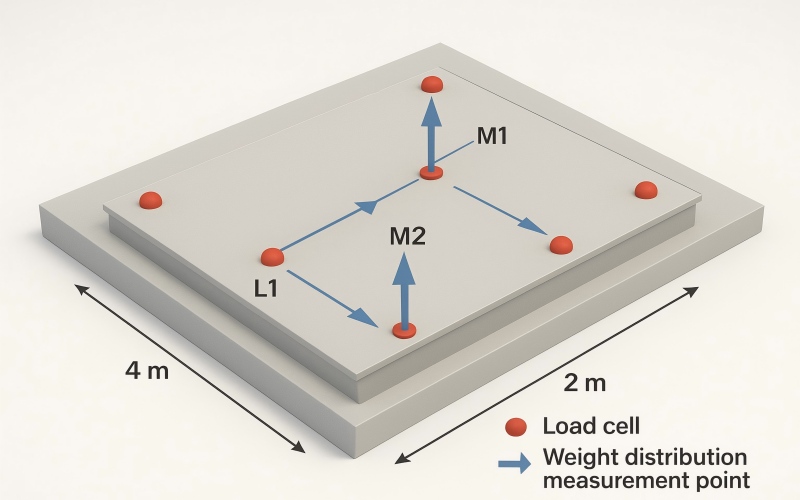
The modular steel platform facilitates flexible size adjustment and quick installation, while the continuous platform provides a seamless surface for high-frequency use. Sufficient width can ensure that the vehicle is fully loaded, and the steel-reinforced parts can prevent sagging under heavy loads.
III. Load Cell Placement and Signal Processing
The accuracy of an industrial weighbridge depends heavily on how the load cells are selected, positioned, and protected. Modern weighbridges typically use shear-beam or double-ended shear-beam load cells due to their high stability and resistance to side forces. For higher-capacity installations, column-type load cells may be used to handle concentrated loads while maintaining precision.
Proper placement ensures that each load cell receives an equal share of the load.
Load cell cables must be shielded and properly grounded to prevent electromagnetic interference from factory equipment such as motors, conveyors, and welding machines. A high-quality junction box with waterproof sealing, surge protection, and independent trimming circuits allows fine-tuning of each load cell’s output to achieve perfect balance.
In advanced systems, digital load cells further improve reliability. They convert analog signals into digital values inside the sensor itself, reducing noise and allowing real-time diagnostics, automatic fault detection, and more stable long-distance transmission. These features make digital load cells well-suited for automated, high-precision weighing environments.
IV. Weighbridge Installation Foundation
Pit-mounted Weighbridges Installation Foundation
Choosing the correct installation type is critical for both operational efficiency and long-term weighing accuracy. Pit-mounted weighbridges are installed flush with the ground, allowing vehicles to drive directly onto a level platform. This type is space-efficient and provides a seamless integration with factory layouts, but it requires careful pit construction, drainage, and waterproofing to protect the load cells.
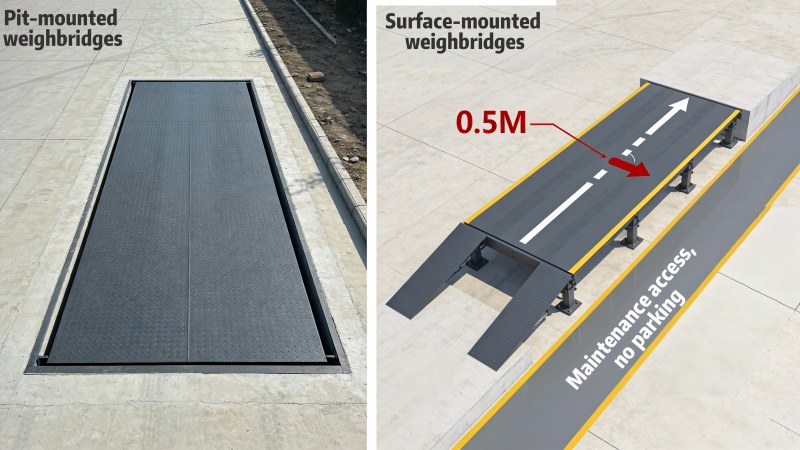
Surface-mounted Weighbridges Installation Foundation
Select a level, solid, and load-bearing surface, ensuring the ground meets required flatness standards to avoid compromising weighing accuracy.
Ensure proper drainage around the surface-mounted weighbridges to prevent water accumulation.
Allow adequate space for the installation of electrical and communication lines.
Regardless of the installation type, a properly engineered foundation is essential. The concrete base should have sufficient strength, typically C30 or higher, and be designed to evenly distribute static and dynamic loads. Soil bearing capacity must be assessed, especially in soft or clay soils, and ground reinforcement or piling may be required to prevent uneven settlement. Proper leveling ensures horizontal alignment, which is crucial for accurate measurements.
Drainage and environmental considerations are equally important. The foundation should maintain a slight slope (0.5–1%) to direct water away, and waterproof conduits or ventilation channels should protect sensors and cables from moisture. Corrosion-resistant coatings and suitable materials help maintain long-term structural stability and reduce maintenance costs.
V. Calibration and Maintenance for Weighbridge
- Regular calibration is quite important for maintaining the accuracy of industrial weighbridges. Calibration is usually carried out using standard weights or reference vehicles. Calibration should be carried out regularly, especially after installation, frequent use or structural adjustment.
- The maintenance of steel frames and sensors is equally important. Checking for signs of deformation in the frame, sensor performance and wiring integrity can help prevent measurement drift.
VI. Data Integration and Automation for Weighbridge
Modern industrial weighbridges are no longer independent devices but part of the entire data system. By connecting the floor scale with the factory’s ERP, MES or logistics platform, weighing data can be automatically recorded, archived and analyzed without human intervention, significantly reducing human errors and improving operational efficiency.

The digital weighing instrument and controller support multiple communication protocols, including RS-232, Modbus, Ethernet and wireless transmission, enabling data to be sent in real time to the monitoring room or cloud instrument panel. When the vehicle reaches the set weight, it can automatically trigger operations such as opening the barrier, printing or batch recording.
More advanced automation solutions also include RFID vehicle identification, automatic license plate recognition (ANPR), remote monitoring, and AI-based overload warning. These technologies help factories standardize weighing processes, enhance traceability, and strengthen overall production management capabilities.
In general, designing a high-accuracy industrial weighbridge requires a comprehensive understanding of structural engineering, sensor technology, installation conditions, and digital integration. From selecting a reinforced steel frame to optimizing load cell placement and signal processing, every element contributes to long-term stability and precise measurement results.