

John Doe
Tonglida Heavy Industry Machinery Engineer
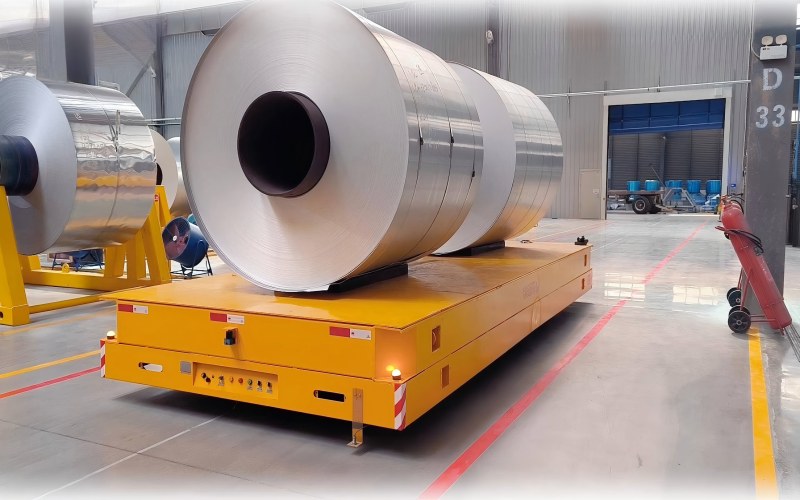
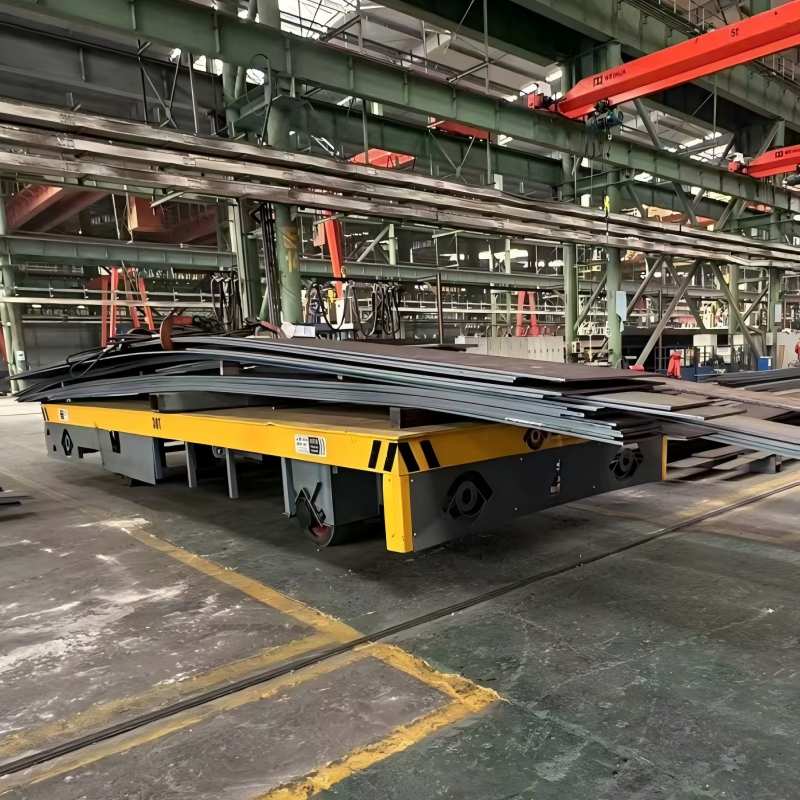
Transfer carts are industrial material handling equipment specifically designed for the safe and efficient transport of heavy materials. It operates flexibly within factories, workshops, and warehouses. Unlike forklifts or cranes, it moves large, irregularly shaped, or overweight cargo without requiring fixed infrastructure. Particularly in confined spaces, it can transport loads according to your required sizes. Transfer carts can also operate concurrently with cranes to achieve seamless transitions between lifting and horizontal transport. This eliminates repetitive lifting and repositioning, optimizes material flow paths, and shortens task cycles.
Transfer carts are widely used for transporting steel coils, molds, turbines, transformers, metal plates, and other industrial components. They help businesses enhance production efficiency.
What types of transfer carts are available?
1. Trackless Transfer Cart
2. Rail Transfer Cart
3. Die Transfer Cart
4. Low-height Heavy Duty Transfer Cart
5. Coil Transfer Cart
6. Mold Transfer Cart
7. Rotating Assembly Transfer Cart
8. High-Temperature Material Transfer Cart
9. Hydraulic Lift Platform Material Transfer Cart
10. Explosion-Proof Material Transfer Cart
11. Roll transfer cart
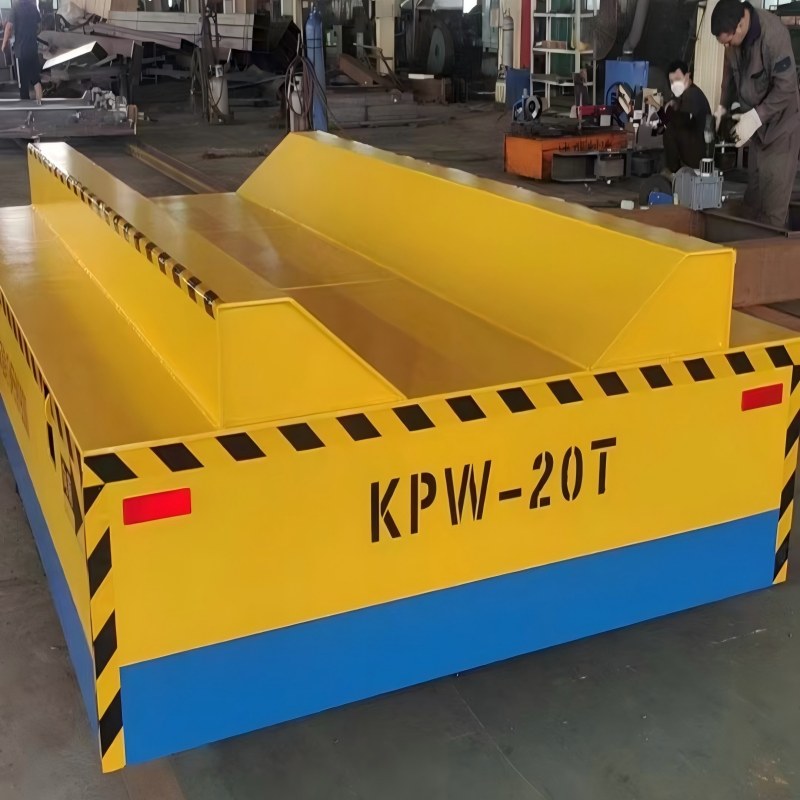
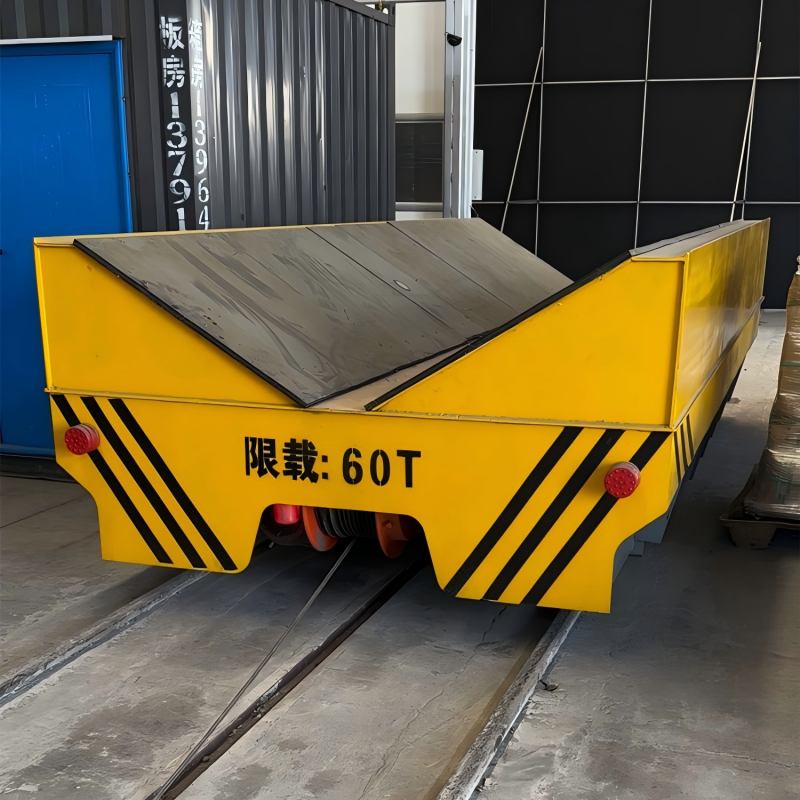
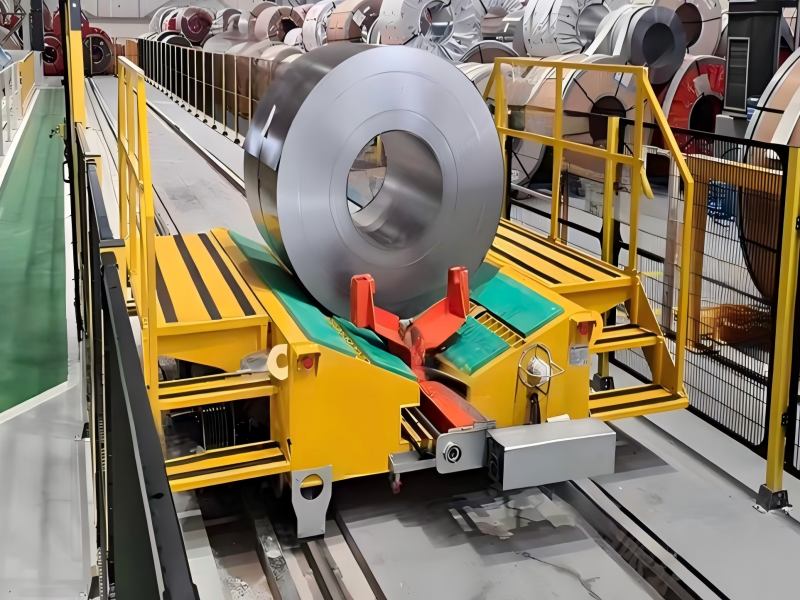
Trackless Transfer Cart
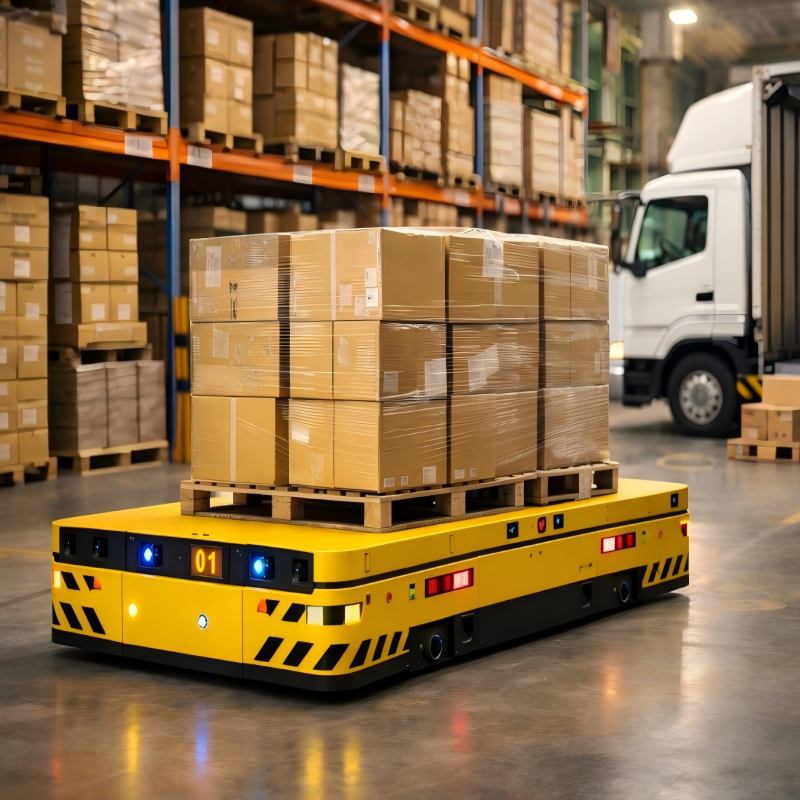
A trackless transfer cart is a battery-powered material handling vehicle that operates without fixed rails. Equipped with solid rubber or polyurethane wheels, it moves freely within workshops, warehouses, and outdoor areas.
Rail Transfer Cart
A rail transfer cart runs on fixed steel rails and is specifically designed for stable point-to-point material transport. This equipment is commonly found in steel mills and assembly lines.
Die Transfer Cart
A die transfer cart is specifically engineered to move stamping dies, forming dies, or heavy tools between storage areas and presses. Typically featuring a reinforced structure, it incorporates a low-speed, high-torque drive system and may include optional lifting or pushing mechanisms.
Low-Height Heavy-Duty Transfer Cart
A low-height heavy-duty transfer cart utilizes a minimized platform height design, making it suitable for height-restricted environments or direct docking with machinery and conveyors.
Coil Transfer Cart
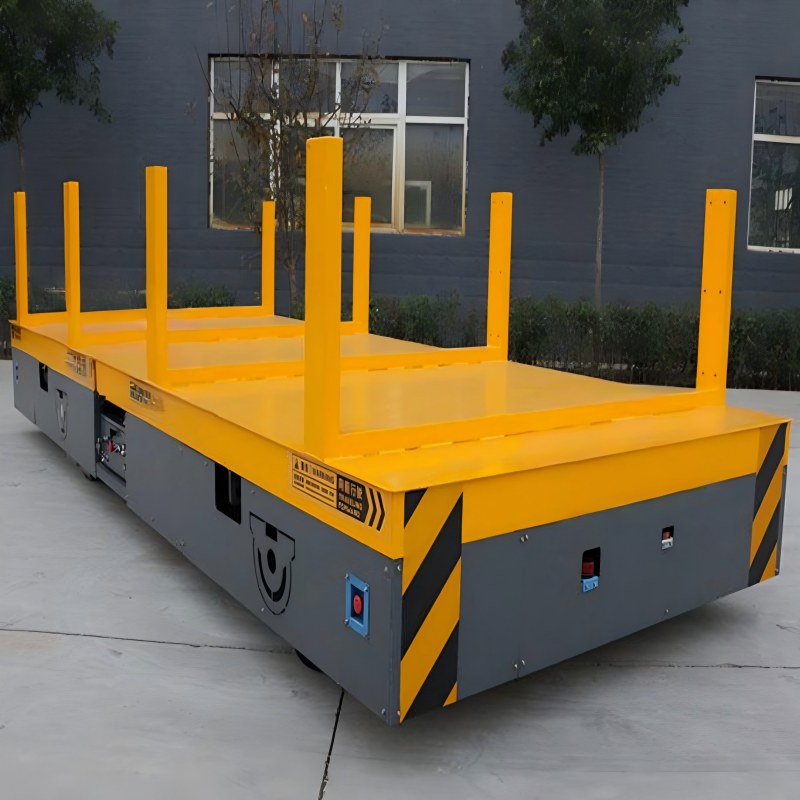
A coil transfer cart is used for the safe transportation of steel, aluminum, or copper coils. The platform is typically equipped with V-shaped brackets or saddle supports to prevent coil rolling and ensure load stability. These carts are widely used in steel mills, metal processing plants, and coil storage yards.
Mold Transfer Cart
A mold transfer cart is specifically designed for heavy, large molds used in casting, injection molding, or forging processes. It emphasizes high structural rigidity and precise positioning, with optional hydraulic lifting or automatic alignment functions.
Rotating Assembly Transfer Cart
A rotating assembly transfer cart features a turntable or rotating platform to pivot loads to precise angles during transport or assembly operations.
High-Temperature Transfer Cart
A high-temperature material transfer cart is engineered for transporting molten metal containers, hot castings, or heated components. It utilizes heat-resistant materials alongside specialized wheel assemblies and electrical components.
Hydraulic Lift Platform Transfer Cart
A hydraulic lift platform material transfer cart integrates a lifting system into the transfer cart, enabling vertical height adjustment during loading and unloading operations.
Explosion-Proof Transfer Cart
This cart utilizes explosion-proof motors, control systems, and safety components compliant with relevant standards, widely applied in chemical plants, oil and gas facilities, and specialized industrial zones.
What are the Features of a Transfer Cart?
1. High-efficiency stable transport: Load capacity ranges from 1 ton to 200 tons, with customizable load specifications for large industrial materials like steel plates, structural components, and motor parts.
2. Flexibility: Whether track-guided or trackless, transfer vehicles enable agile production line scheduling and precise positioning.
3. Wireless remote control or autonomous navigation
4. Safety features: Collision avoidance, alarm systems, and emergency braking
5. Customizable workbench dimensions
6. Smart control options: Advanced models can be equipped with autonomous navigation, laser guidance systems, or integrated factory management systems (e.g., WMS)
Where can Transfer Carts be Applied?
- Metal & Steel: Transporting steel coils, ladles, molds
- Automotive & Machinery: Moving engines, chassis parts, large molds
- Energy & Renewable: Turbines, wind blades, transformers
- Warehousing & Logistics: Handling large volumes of materials
- Manufacturing plant
How to Choose the Suitable Transfer Cart
When selecting a transfer cart, it is essential to consider the factory environment, characteristics of the materials, and production workflow to ensure safety and efficiency. Key factors include:
1. Load & Cargo Size
Determine the maximum load and material dimensions. Exceeding the designed capacity can damage the cart or cause instability, while a platform that is too small may fail to safely carry the materials.
2. Working Environment & Routes
- Fixed Paths: For repetitive, fixed routes, rail transfer carts provide high stability and fast transport.
- Free Movement: In complex or frequently changing layouts, trackless carts offer flexibility to navigate around obstacles.
- Space Constraints: In narrow aisles or for on-the-spot rotations, consider the minimum turning radius and sideways movement capabilities.
3. Eco-friendly Battery
4. Control Method
- Remote Control: Increases operational safety distance, ideal for high-risk scenarios.
- Autonomous Navigation: Reduces human intervention
5. Special Requirements
- Environmental Conditions: High temperature, high pressure, humidity, or explosion-proof requirements must be considered.
- Smart Features: Optional features such as load monitoring, route optimization, and integration with MES/WMS
Practical Tips:
Conduct an on-site survey to assess routes, obstacles, and space constraints.
Determine load capacity and cart type based on material weight, size, and transport frequency.
If future production layout changes are expected, prioritize flexible models.