
Container Loading System Manufacturer
- High efficiency: improve loading and unloading speed
- Automation: Intelligent control realizes easy management by one person.
- High space utilization: maximize the use of space through three-dimensional storage and precise positioning.
- Safe and Reliable: Reduce the risk of manual operation and ensure the stability of the system through intelligent monitoring.
- Flexibility and compatibility: Adapt to a variety of transportation modes and box types.
Container Loading System
Accurate alignment of container ports
Protects box door frames and pallets
Mechanical/hydraulic locking ensures no container displacement during tipping.
In-line weighing of each pallet or complete box (accuracy ±0.5%)
Lengthwise positioning and conveying of pallets and loads
Aligned to container floor level for smooth transitions, travel typically 0.8-1.4 m
Reach-in transition plate to ensure connection to the conveyor platform
Push button control station / wireless remote control optional.
| Category | Parameter | Typical Specification / Range |
|---|---|---|
| Handling Capacity | Suitable Containers | 20ft / 40ft TEU (customized) |
| Load Capacity | 10 – 50 t per load (depends on layout) | |
| Packing Cycle Time | 1 – 5 minutes / container | |
| Cargo / Pallet | Individual Pallet Size | Optional sizes |
| Pallet Capacity | 500 kg – 3,000 kg / pallet | |
| Conveying Performance | Conveyor Speed | 0.1 – 0.6 m/s |
| Power System | Main Drive Power | 5 – 22 kW (depends on length & load) |
| Control System | PLC + HMI (Manual / Semi-auto / Full-auto) | |
| Physical Dimensions | Typical Footprint | L 8 – 10 m × W 3 – 5 m (20ft station) |
| Operating Temperature | -10°C ~ +45°C (special treatment available) |
- Personnel protection: photoelectric protection at the door, emergency stop button, fencing and warning signs.
- Power isolation: conveyor has mechanical stops and electrical interlocks, and can be locked out during power failure.
- Load protection: overload alarm and stop (based on pressure sensors).
- Anti-slip: pallet surface with anti-slip treatment and rubber/polyurethane pads for buffer zones.
- Electrical protection: control cabinet grounding, earth leakage protection, IP rating according to site requirements.
It is designed for standard 20ft and 40ft containers, with customization available for special container sizes.
A full loading/unloading cycle typically takes 1-5 minutes depending on material flow and layout.
The container loading system supports 10-50 tons per load, depending on the structural configuration.
Yes. It improve space utilization and labor efficiency.
It supports semi-automatic, and fully automatic modes through PLC + HMI control.
We provide on-site installation guidance, operator training, warranty support, and lifetime technical service.
Container Loading System Workflow
- 1. Forklift places the palletized goods on the conveyor line entrance or lift table and leaves.
- 2. The operator confirms the number and layout of pallets on the HMI and starts the loading program.
- 3. The conveyor line advances the pallets to the container door at the preset spacing, and the lift table is synchronized and leveled.
- 4. Pallet enters the container and is positioned, clamping device locks the pallet position.
- 5. After completing the crating or reaching the planned number of layers/weight, the operator seals and starts the next crating process
How to maintain Container Loading System?
- Daily Check: Check conveyor belt, pallet positioning pins, emergency stop.
- Weekly Checks: Bearing Lubrication, Belt Tensioning, Pallet Clamp Wear, Junction Box Tightening.
- Quarterly Check: PLC program backup, sensor calibration.
- Annual Inspection: Structural Crack Detection, Full Electrical Inspection & Ground Resistance Test.
- Common spare parts: bearings, remote switches, pallet liners.
How to Choose a Suitable Container Tilter
- 1. Container type and door opening direction (20ft/40ft)
- 2. Pallet standard size and maximum single pallet weight.
- 3. Number of pallets per case and crating layout.
- 4. Target crating beat (crates/hour) and number of operators.
- 5. Consider whether weighing, scanning or integration with WMS is required.
- 6. Clarify site power specifications, floor loading and installation space.
- 7. Whether can provide installation, commissioning and operation training.
Related Products
Container Loading System
Container Loading & Unloading System
Customized Container Loading System
Latest Blogs
Check out our latest news and blog posts

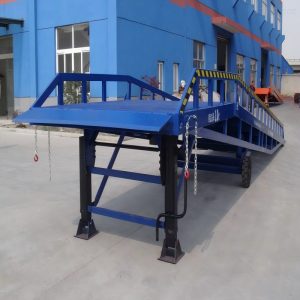
How to Choose the Right Mobile Loading Dock Ramp?
What Is a Mobile Loading Dock Ramp? A mobile loading dock ramp is a piece of loading and unloading equipment used to connect the ground
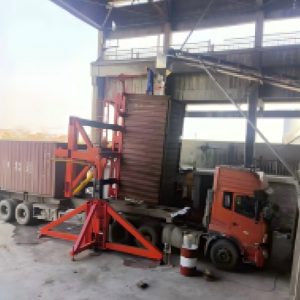
How to Organize Bulk Container Loading and Unloading Efficiently?
Solutions for the Transport of Bulk Commodities in Containers Industries such as agriculture, mining, chemicals, biomass energy and recycling frequently use standard containers to transport
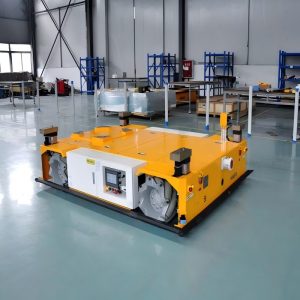
Key Applications and Core Benefits of Automated Guided Vehicles (AGVs)
Looking to automate material handling? Explore the key applications and core benefits of Tonglida Automated Guided Vehicles (AGVs) across industrial environments.
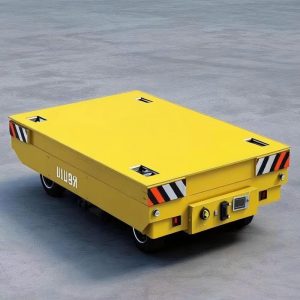
10 Powerful Forklift Alternatives for Heavy-Duty Cargo Handling
Compare 10 forklift alternatives for heavy-duty cargo handling and discover why Tonglida transfer carts are ideal for moving heavy, oversized and long materials safely.
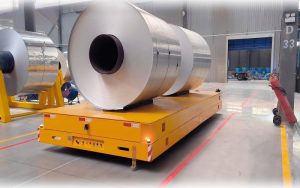
What is a Transfer Cart?
A transfer cart is an efficient material handling and transportation tool specifically designed for factories, warehouses, and production lines.
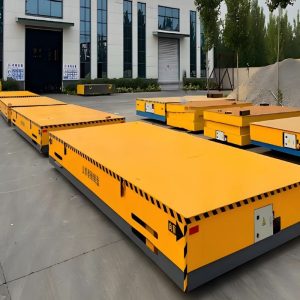
How to Choose the Perfect Electric Transfer Cart?
Compare Tonglida transfer carts with typical designs. Heavy-duty welded construction, advanced drive systems, suitable for more complex ground conditions.